What to Wear for a Job Interview in 2026: The Formula That Worked for Me Across 6 Engineering Interviews
What to wear for a job interview in 2026 is a different question than it was three years ago, and most of the advice still circulating online was written for a world that no longer exists everywhere. I graduated with a civil engineering degree in 2023, went through six job interviews at firms ranging from small regional outfits to large national infrastructure companies, and learned the hard way that the rules are not uniform and the standard advice is often wrong for the actual environment you are walking into.
This post contains affiliate links. If you purchase through my links I may earn a commission at no extra cost to you.
The short answer first, for anyone who needs it immediately: navy or charcoal dress pants or chinos, a clean white or light blue Oxford button-down, brown leather shoes, and a navy blazer for most professional environments. That combination works for 90 percent of job interviews across industries in 2026 and you can put it together for under $150.
The longer answer depends on your industry, the interview format, and a five-minute research step that most people skip. Here is the full breakdown.
The Universal Formula: What to Wear for a Job Interview When You Are Not Sure
When in doubt, this outfit works across industries, formats, and seniority levels:
- Navy or charcoal dress pants or chinos, slim or tailored fit, no wrinkles
- White or light blue Oxford button-down shirt, pressed
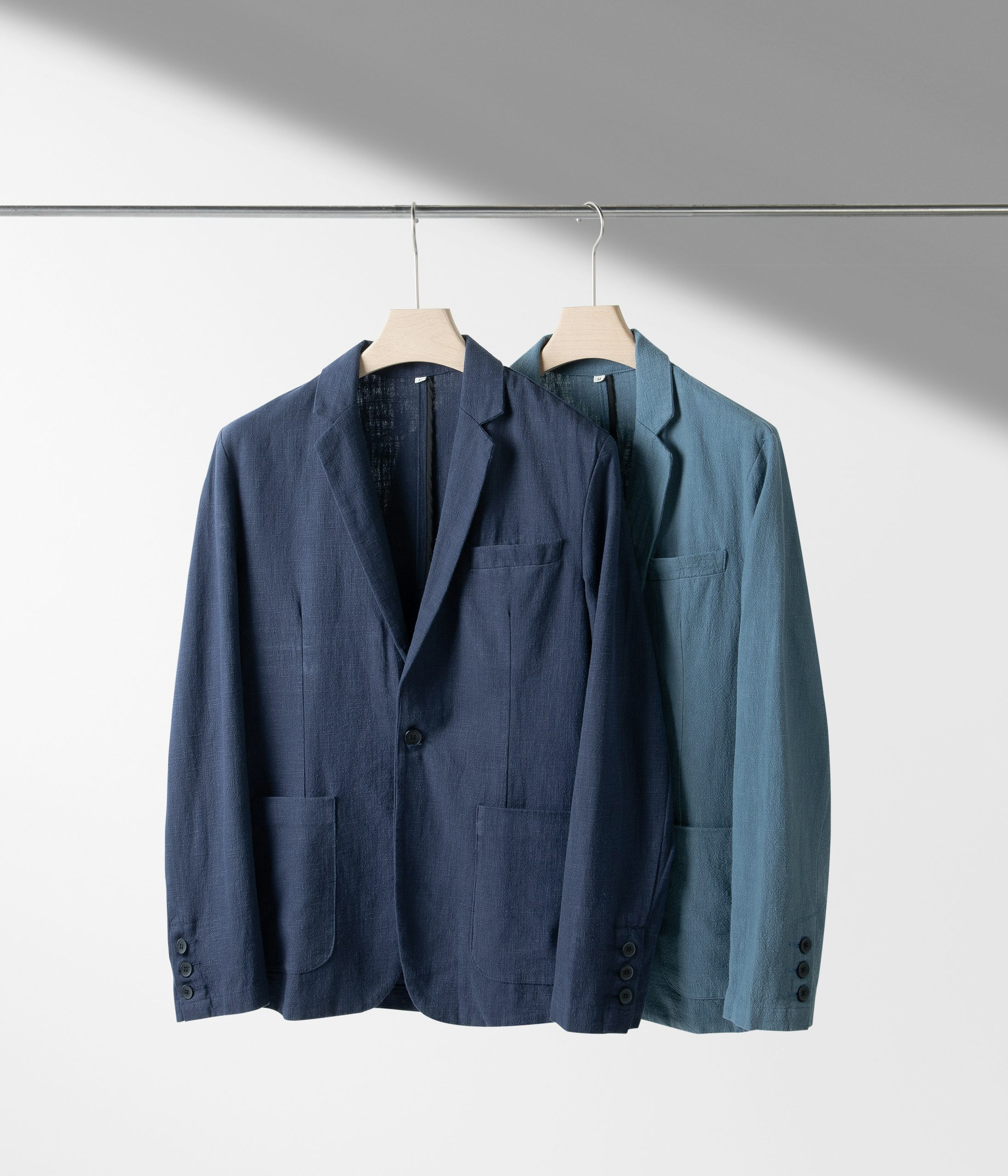
- Navy or charcoal blazer, fitted at the shoulder
- Brown or tan leather shoes, clean and polished
- No tie unless the company culture clearly demands one
That is it. This outfit photographs well on video, reads as professional in person, and signals that you did the minimum research necessary to show up appropriately. It is not exciting. It is not meant to be. It is meant to make the interviewer focus on what you say rather than what you are wearing.
One rule that does not change regardless of format or industry: fit matters more than brand. A well-fitted $35 pair of chinos looks more professional than a wrinkled $200 pair that pulls at the thighs. Press your clothes the night before. Every time.
The pieces I used for my own interview outfits: Amazon Essentials slim-fit wrinkle-resistant chino (~$35) for the pants, Amazon Essentials slim-fit Oxford button-down (~$30) for the shirt, Amazon Essentials slim-fit blazer (~$60) for the jacket. Total under $150. Nobody asked me where they were from.
What to Wear for an In-Person Job Interview: The Research Step Nobody Does
The default advice of business formal for every interview is gone in most industries. Showing up in a full suit to a construction firm or a tech startup signals you did not research the culture. That is a first impression problem before you have said a word.
The research takes five minutes. Go to the company’s LinkedIn page and look at employee photos, not the stock images on their website, the actual candid shots from events and office days. Look at what interviewers are wearing in their profile photos. Look at what people at the level you are targeting wear on a daily basis.
Here is what you will typically find in 2026 by industry:
- Finance, consulting, law, accounting: business professional or polished business casual still expected. Suit or blazer with dress pants is the right call.
- Engineering and construction: business casual to smart casual depending on firm size. Large national firms skew more formal for first rounds. Small regional firms are often relaxed across all rounds.
- Tech companies: smart casual to almost anything. The blazer is often optional. Clean and fitted matters more than formal.
- Creative industries: personality is expected. Smart casual with a considered detail. Looking like you thought about it without trying too hard.
The safe rule across all of them: dress one level above what employees wear day to day. If they wear jeans and polos, you wear chinos and a button-down. If they wear business casual, you wear business casual with a blazer. Going one level up signals respect without looking out of place.
What to Wear for a Virtual Job Interview: The Camera Rules Nobody Mentions
Virtual interview dress has rules that are completely distinct from in-person standards and almost no general advice covers them specifically. The camera changes everything.
The most important rule is contrast. Your clothing needs to contrast clearly with your background. A navy shirt against a light wall reads crisply on camera. A light gray shirt against a white wall makes you look like you are floating. A patterned shirt creates visual noise that distracts from your face on a small video thumbnail.
Colors that photograph best on video: dark navy, forest green, burgundy, medium blue, and charcoal. Avoid pure white, which overexposes under webcam lighting. Avoid black, which reads flat and can look severe. Solid colors only. Patterns create visual artifacts on video compression.
Dress from head to toe the same way you would for an in-person interview, even though the interviewer only sees your top half. This is not just practical in case you need to stand up. It is psychological. Wearing the full outfit affects how you carry yourself and how you speak. I noticed this personally in my own virtual rounds.
Camera position matters as much as what you are wearing. Eye level or slightly above is correct. Looking up into the camera from below is unflattering and reads as unprepared. A laptop on a stack of books or a monitor arm fixes this in under a minute.
Background: solid wall or clean bookshelf. Not a busy room. Not a virtual background unless it is a plain neutral one. Fake backgrounds have visual artifacts around your edges that signal lower effort than a real, clean background does.
What Civil Engineering Firms Actually Expect: From Someone Who Went Through It
Most interview dress advice is written for office environments and it does not transfer cleanly to engineering, which sits at an unusual intersection of professional and field-based work. Here is what I actually experienced.
Large national or multinational infrastructure firms expected business casual at minimum for first-round interviews, business professional or close to it for final rounds. Think blazer, dress pants, Oxford shirt. No tie at most of them but the blazer was clearly expected.
Smaller regional firms were often more relaxed. Business casual worked for all rounds and at one firm I interviewed at, two of the people in the room were wearing polos and chinos. The blazer I wore felt slightly overdressed in that room but it did not hurt me. Slightly overdressed beats underdressed every time in an interview setting.
Client-facing roles are the exception regardless of firm size. Project manager, business development, client-facing engineer. These roles skew more formal in the interview because the people across the table are evaluating whether you will represent the company well in front of clients. Blazer is mandatory. Dress pants over chinos.
Field and construction-adjacent roles have their own calculus. Showing up in a full suit to interview for a field engineer role at a smaller firm reads as someone who has never worked in the field. Business casual with clean, practical elements works better. This nuance is almost never captured in generic interview dress advice.
What to Actually Buy If You Need a Job Interview Outfit Right Now
You do not need to spend a lot to look sharp for an interview. Here is the exact stack I would build today for under $150:
- Pants: Amazon Essentials slim-fit wrinkle-resistant chino (~$35) in navy or charcoal. True to size. Ships Prime.
- Shirt: Amazon Essentials slim-fit Oxford button-down (~$30) in white or light blue. Collar stays fix any collar issues.
- Blazer: Amazon Essentials slim-fit blazer (~$60) in navy or charcoal. Check sizing reviews before ordering.
- Shoes: Clean leather or leather-look dress shoes in brown or tan. Check Nordstrom Rack for discounts on actual leather.
If you want better pants that hold up beyond the interview, the Quince stretch chinos (~$40 to $60) perform closer to lululemon ABC pants than anything else at that price and look professional in any setting I have worn them.
The Cost-Per-Wear Math on a Good Interview Outfit
A $150 interview outfit used across three job interviews, four client presentations, two professional events, and one wedding over two years costs $15 per wear. A $400 outfit used the same number of times costs $40 per wear and does not necessarily look twice as good.
The investment in one complete, properly fitted interview outfit is one of the best cost-per-wear purchases in a young professional’s wardrobe. Buy it once, care for it properly, and it carries you through every high-stakes appearance for years.
I cover the full suit investment case, including when a suit makes financial sense versus a blazer and dress pants, in a separate article.
[INTERNAL LINK (COMING SOON): Why Every Young Professional Should Own at Least One Good Suit]
[INTERNAL LINK: I Lost 40 Pounds and Had to Replace My Entire Lululemon Wardrobe. Here Are the 4 Best Lululemon Dupes for Men I Found.]
Prices listed are approximate as of June 2026 and subject to change. Some links in this article are affiliate links. Always verify current pricing before purchasing.